
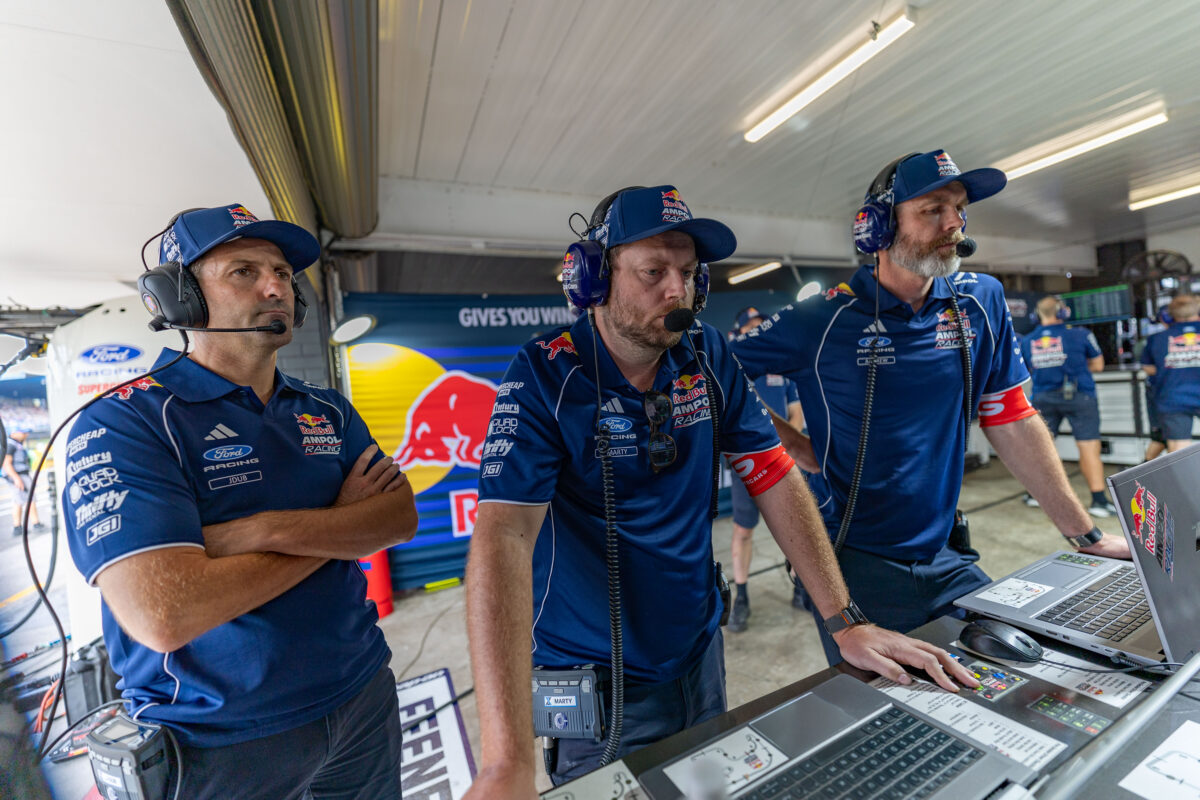
Martin Short, Race Engineer for the #88 Ford Mustang and Supercars Championship leader Broc Feeney, gives an in depth preview of the upcoming Melbourne SuperSprint round including the uniqueness of short, fast racing alongside F1 on the world’s biggest stage.
How did you, Broc and the team feel after round one at Sydney Motorsport Park?
Absolutely happy with the start, to come away with two of three wins and leading the Drivers Championship, it’s a great way to kick off the year, especially with the switch to the new Ford Mustang.
To come away from round one with those results between us shows the team has done a fantastic job in the off‑season.
What did you learn about the car and the rest of the grid in that opening round?
The Mustang has a strong base. Its balance is consistent over a stint and it responds clearly to setup changes. There’s still more performance to unlock, but we’re encouraged by how competitive it felt straight out of the gate.
The field is incredibly tight this year. A lot of teams have found gains, so we expect margins in both qualifying and the races to stay very small. Execution will matter more than ever.
What are the differences between SMP and AGP for setup and driving?
SMP is all about tyre life. It has a high‑flow layout like AGP, but with much lower grip and an older surface that’s tough on tyres… almost like a cheese grater.
AGP, by contrast, has much higher grip and a smoother, more modern surface. At Albert Park we focus on a more aero‑efficient, stable platform to maximise confidence in the fast sections.
The biggest difference is how much the grip evolves. The track hasn’t had rubber on it for a year, so the surface improves rapidly across the weekend. The surface is relatively new and designed for Formula 1, so it’s extremely smooth. It rubbers in quickly and generates grip levels higher than most circuits we race on. You need to anticipate that increase and adjust the setup as the track evolves.
Once the Formula 1 cars run and lay down a lot of rubber, the track can be up to a second quicker for when we drive on it.
What are the key parts of a lap around Albert Park?
AGP is technically a street circuit, but not in the traditional Supercars sense… it’s wider, faster, and more flowing. It’s a blend of long straights, fast‑flowing corners, and fewer heavy‑braking zones. You carry speed for most of the lap.
The plan is to qualify on pole, get a strong launch, and ideally lead into that complex at turn three, four and five to stay clear of any congestion.
They removed the old chicane a few years ago, that’s made the circuit significantly faster and more flowing. That section now rewards commitment and contributes heavily to the increase in average lap speed.
With a clean exit from turn eight, we’re flat very quickly. The car reaches top speed, around 275 km/h, just before braking into turn nine. It’s roughly 18 seconds from exiting turn eight to the braking zone, so it’s a very long, fast run.
Melbourne weather can play a huge part in the race — what if it rains?
Melbourne weather can be very unpredictable, which is always a challenge. For the past two years we haven’t had pit garages at AGP, meaning we can’t perform pit stops easily during a sprint race. Changing tyres mid‑race is highly unlikely, so the pre‑race tyre call becomes even more critical.
If conditions deteriorate too much, race control may red‑flag the race. In that scenario, teams would be able to change tyres under controlled conditions before the restart.
Thankfully the weather is looking ok all weekend from what we’re seeing.
*Quotes not for republishing